See the balance
Understand what remains between two people before you do anything else.
 SpendolOpen app
The clear way to share money
Track the everyday. Split the shared stuff. Settle what remains without losing the human story behind the numbers.
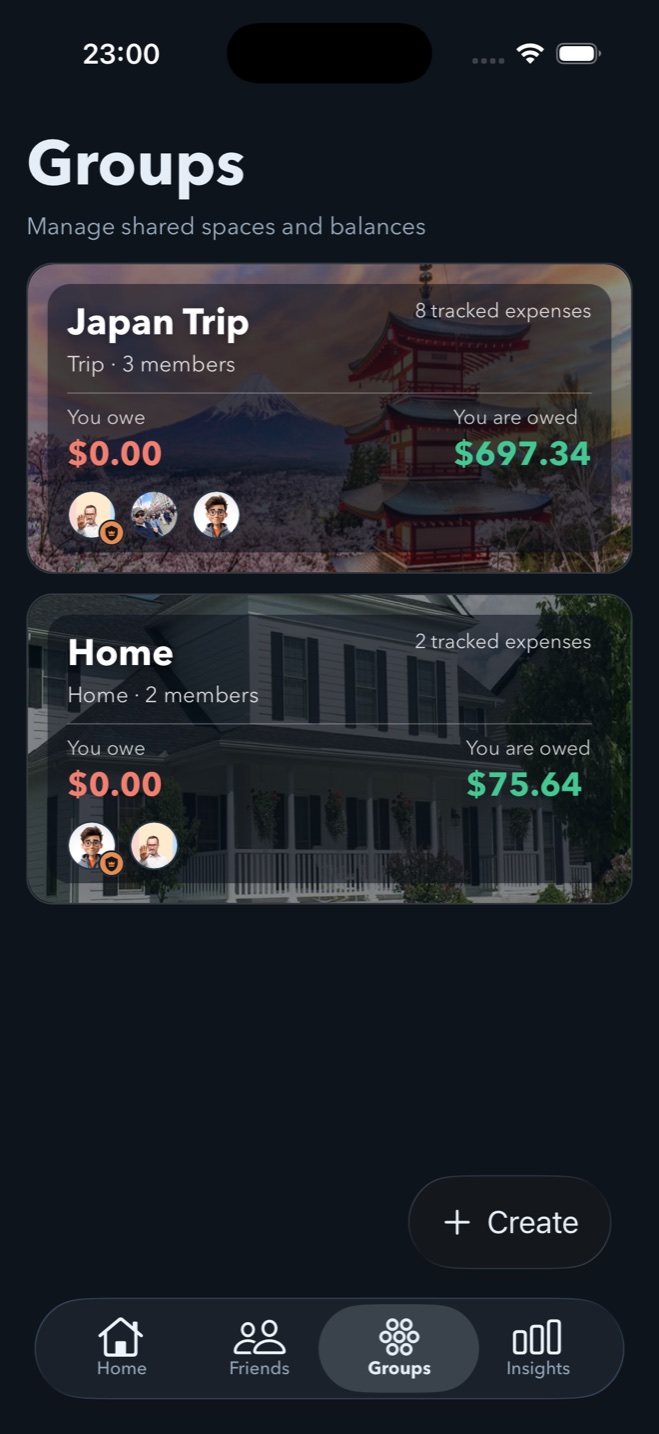
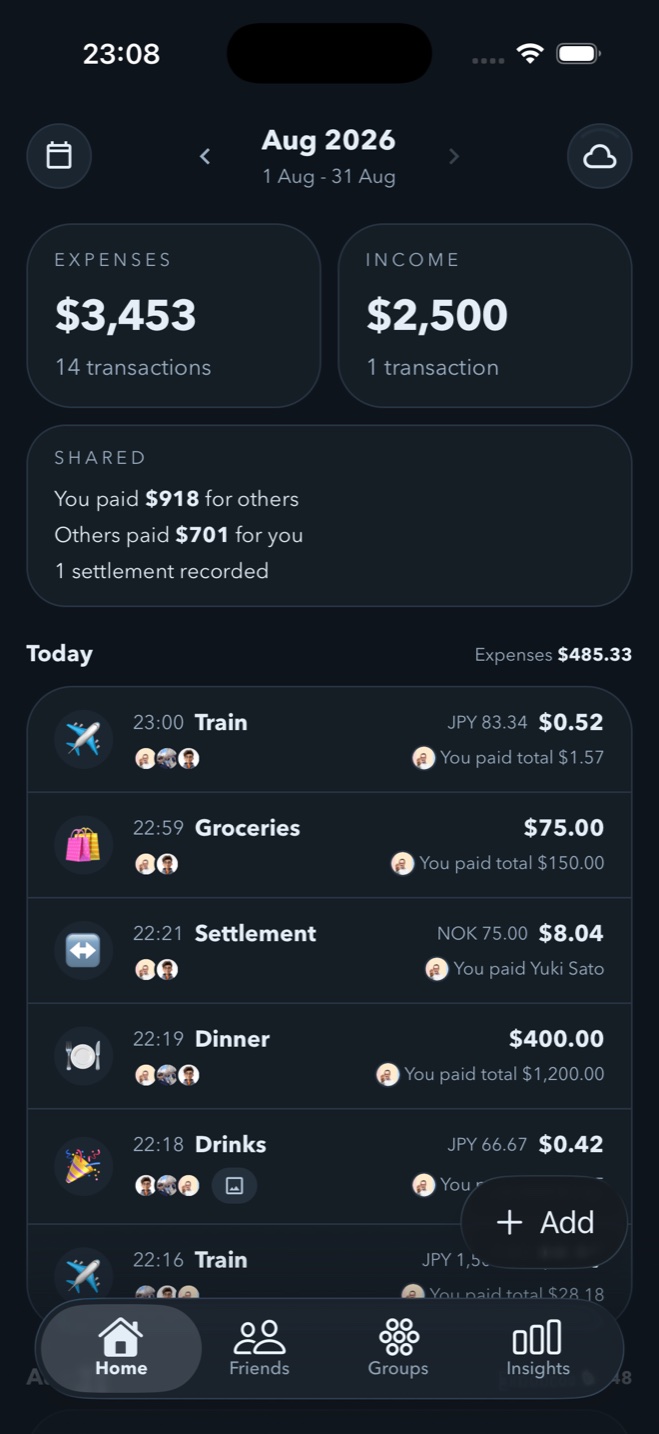
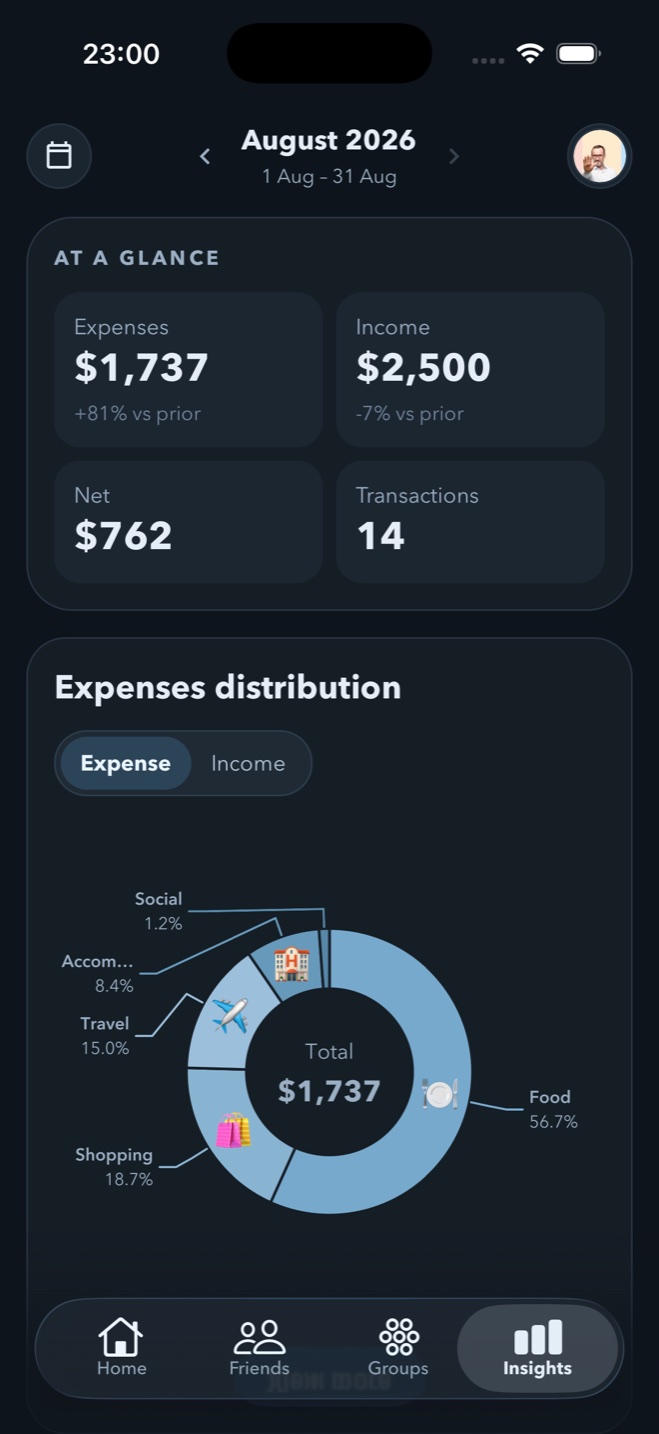
One connected record
The bill, the loan, the balance, and the settlement stay connected, so “I’ve got this” can end with everyone even.
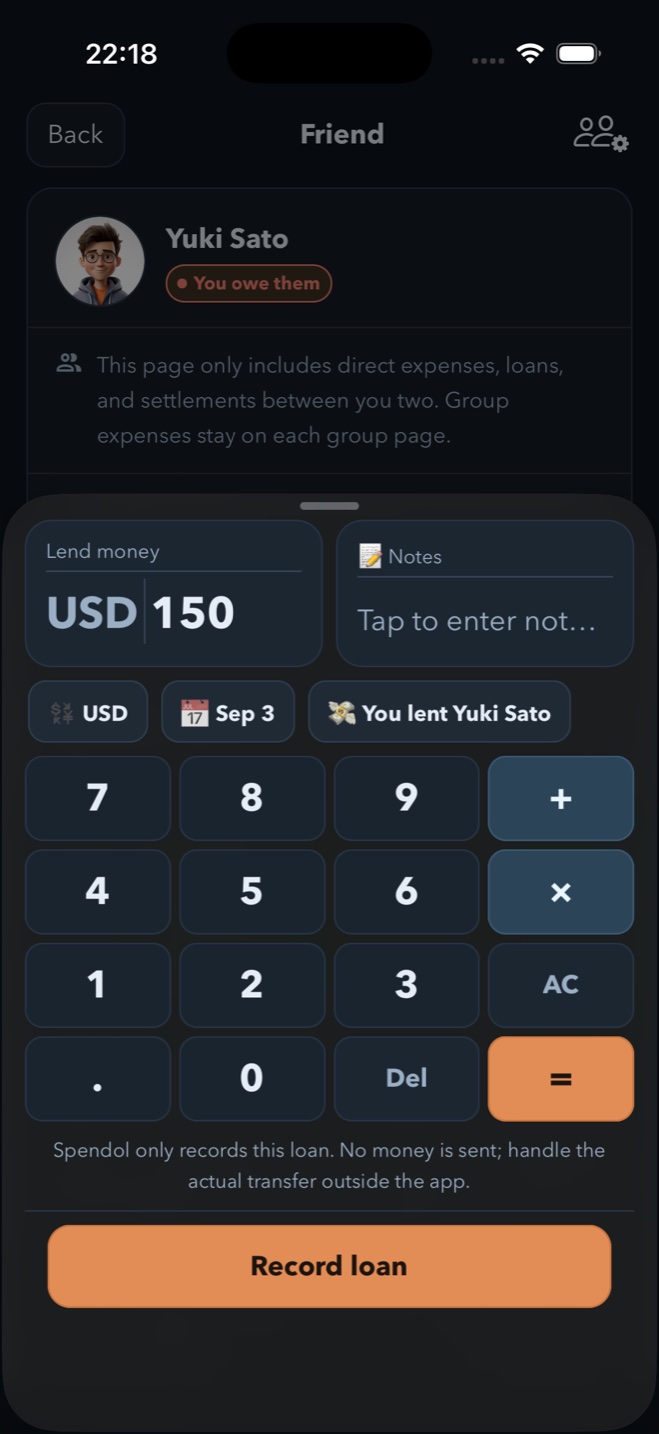
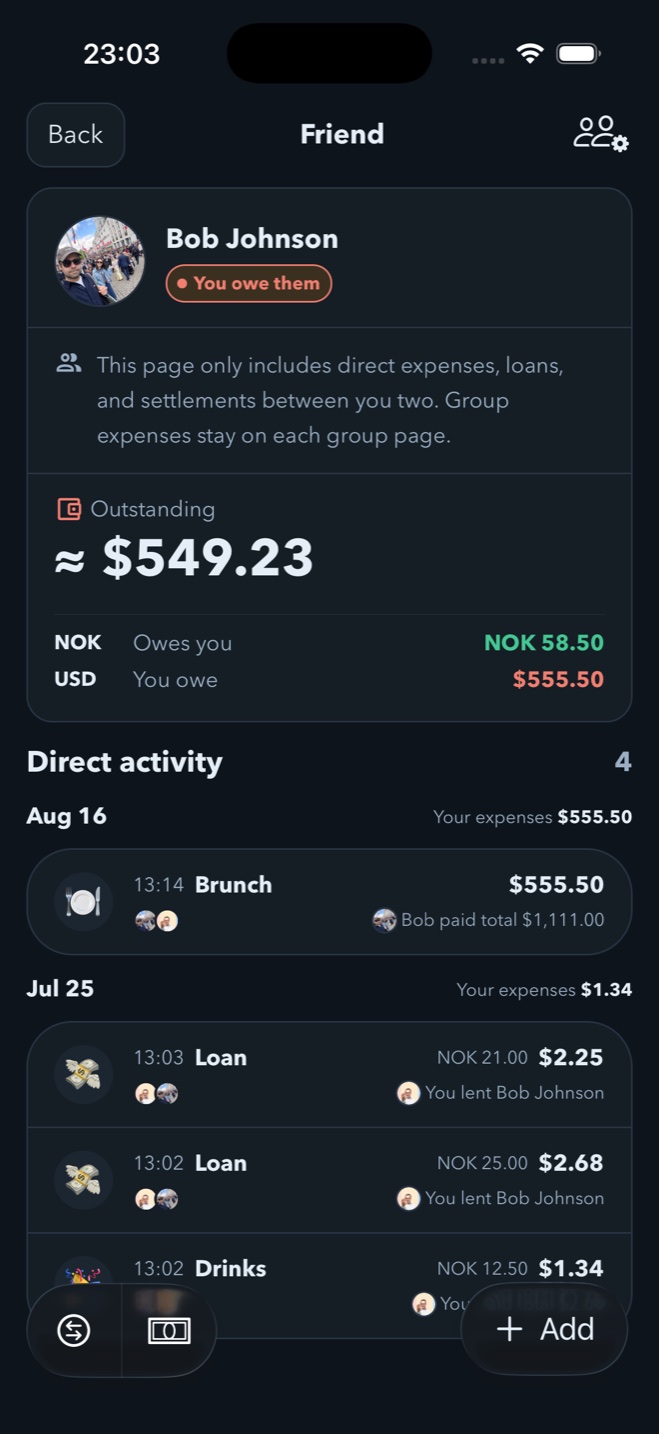
Understand what remains between two people before you do anything else.
Add a shared cost, note a loan, or capture the context while it is still fresh.
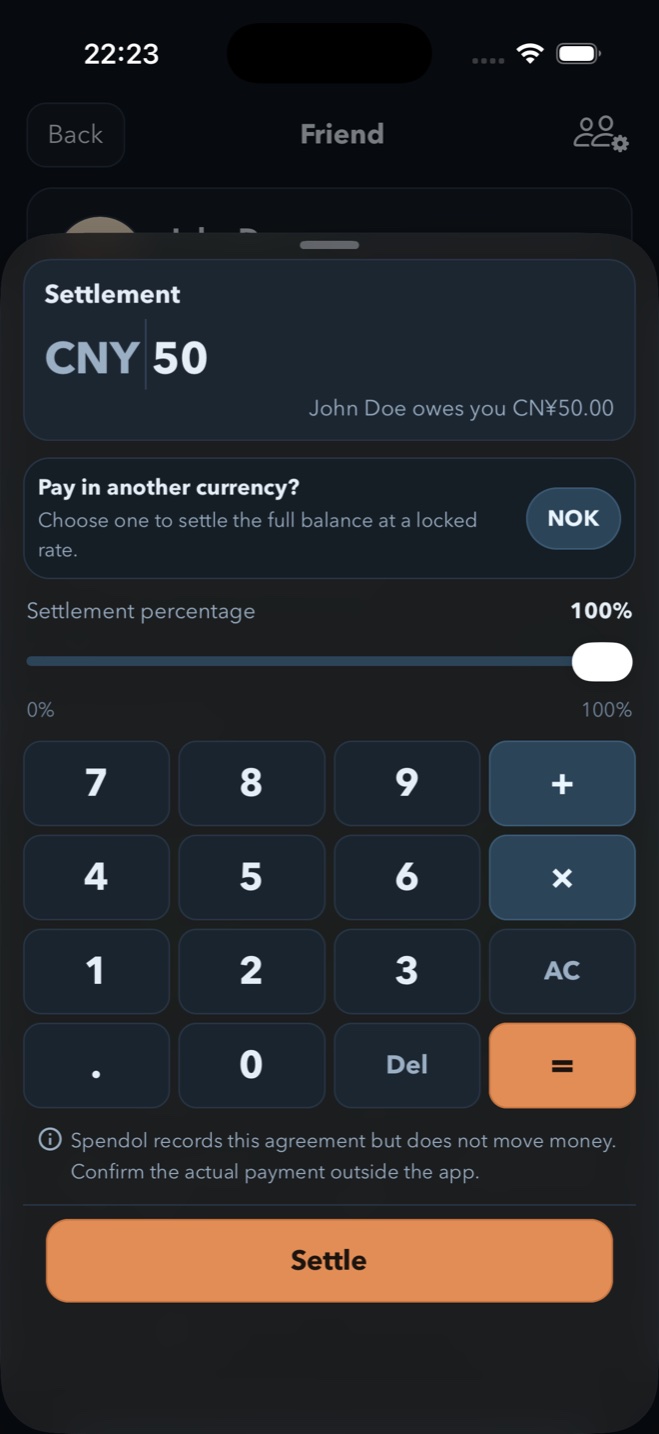
Settle in the currency that works and keep the agreement in the activity trail.
Explore the details
Spendol stays quiet around the edges and gives every shared-money detail a proper place.
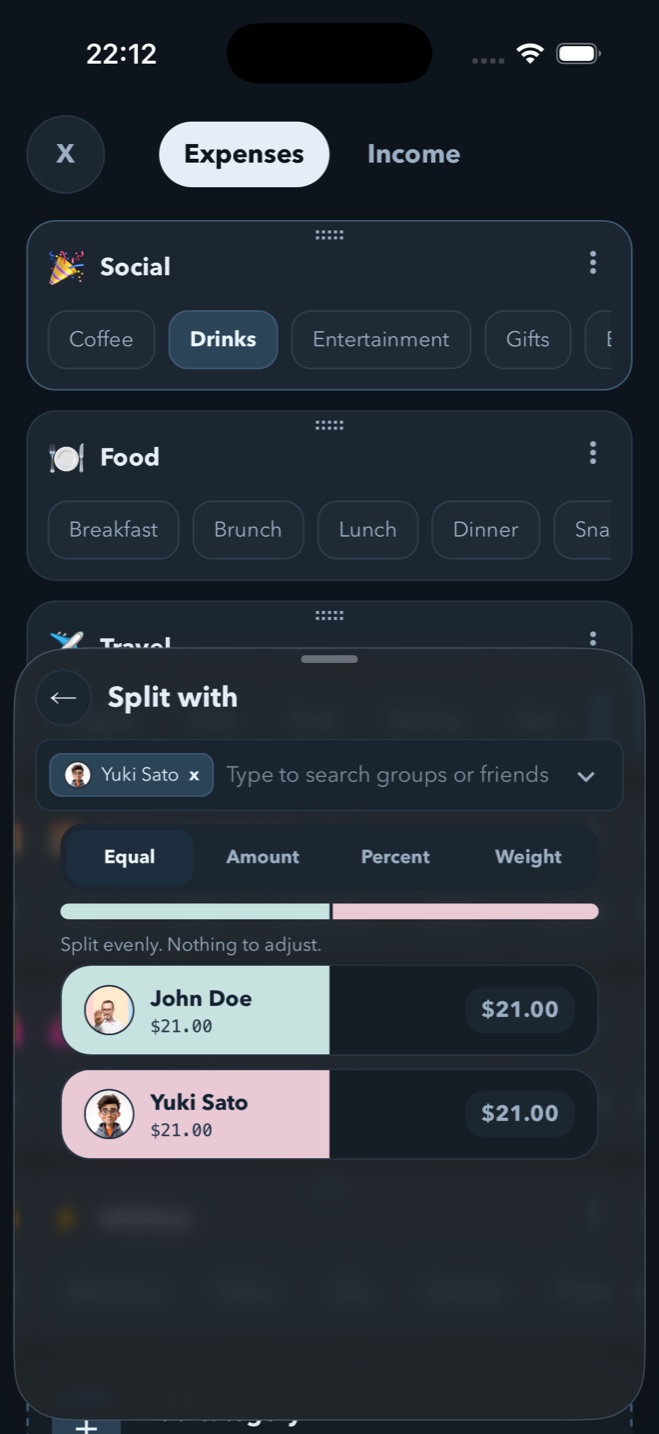
Flexible splits
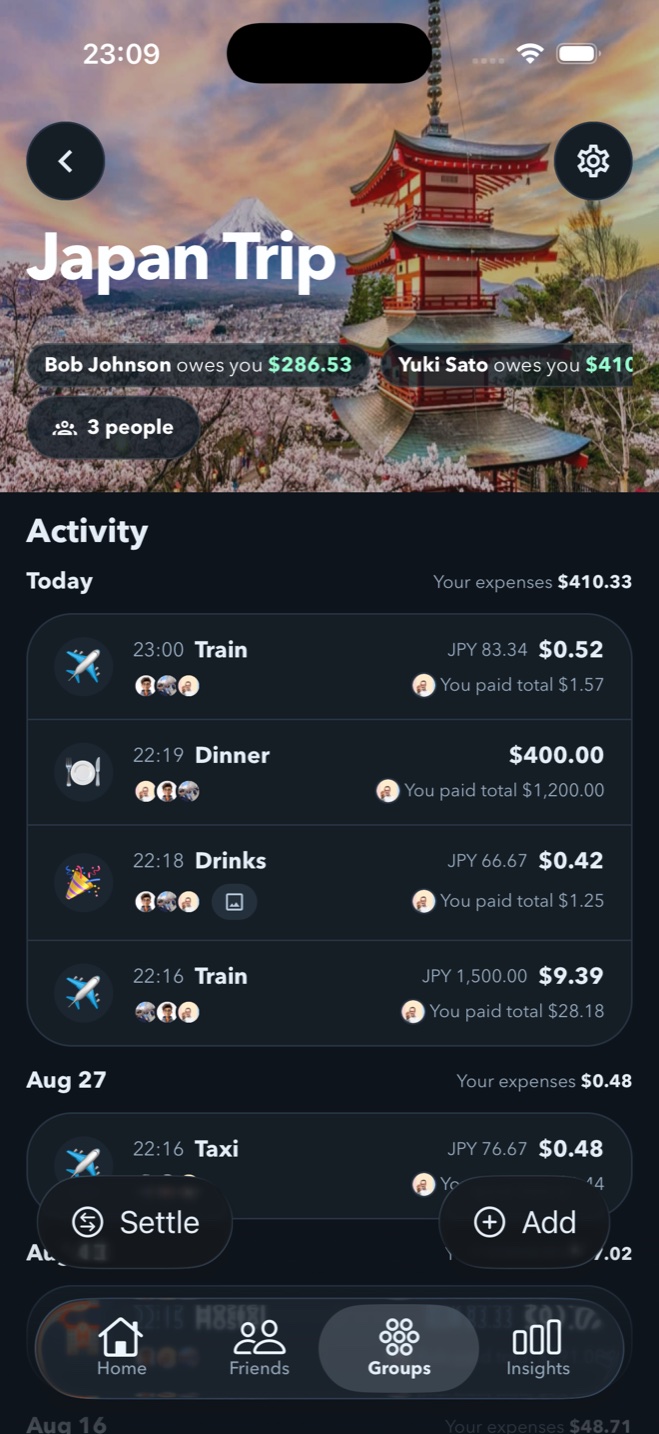
Shared spaces
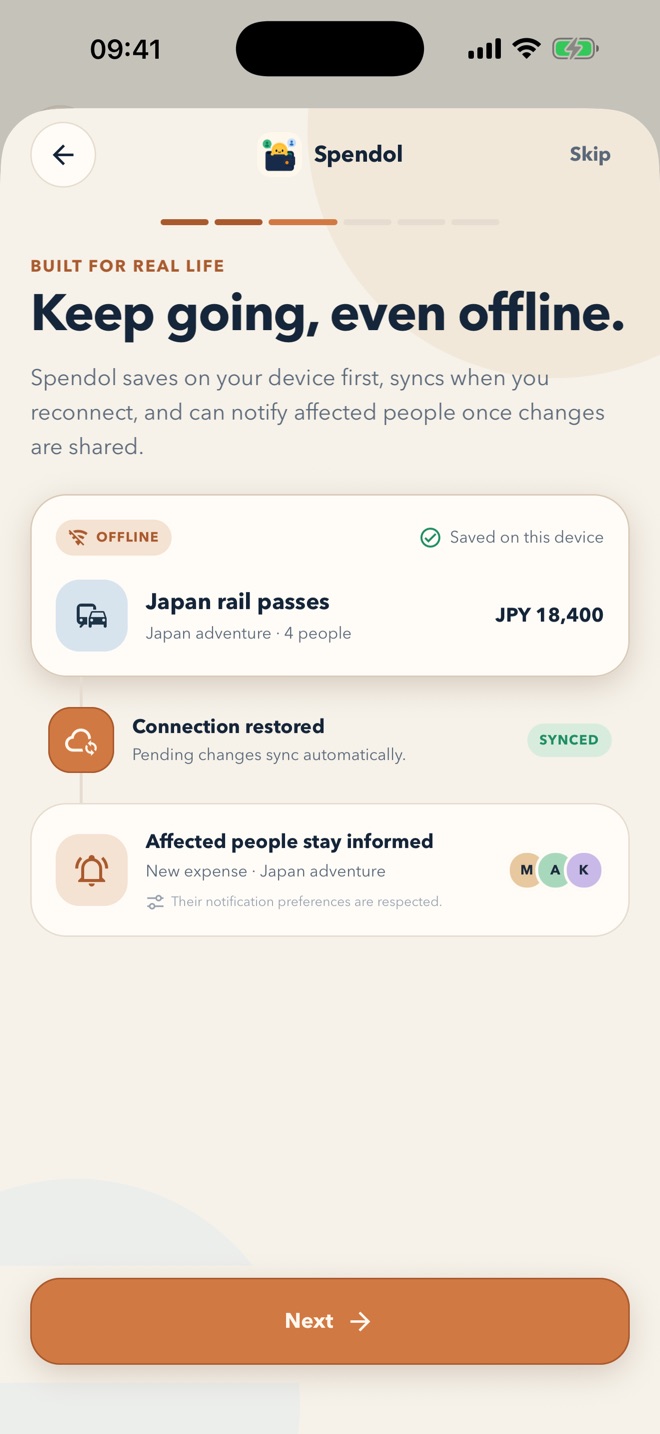
Offline-first
Useful insights
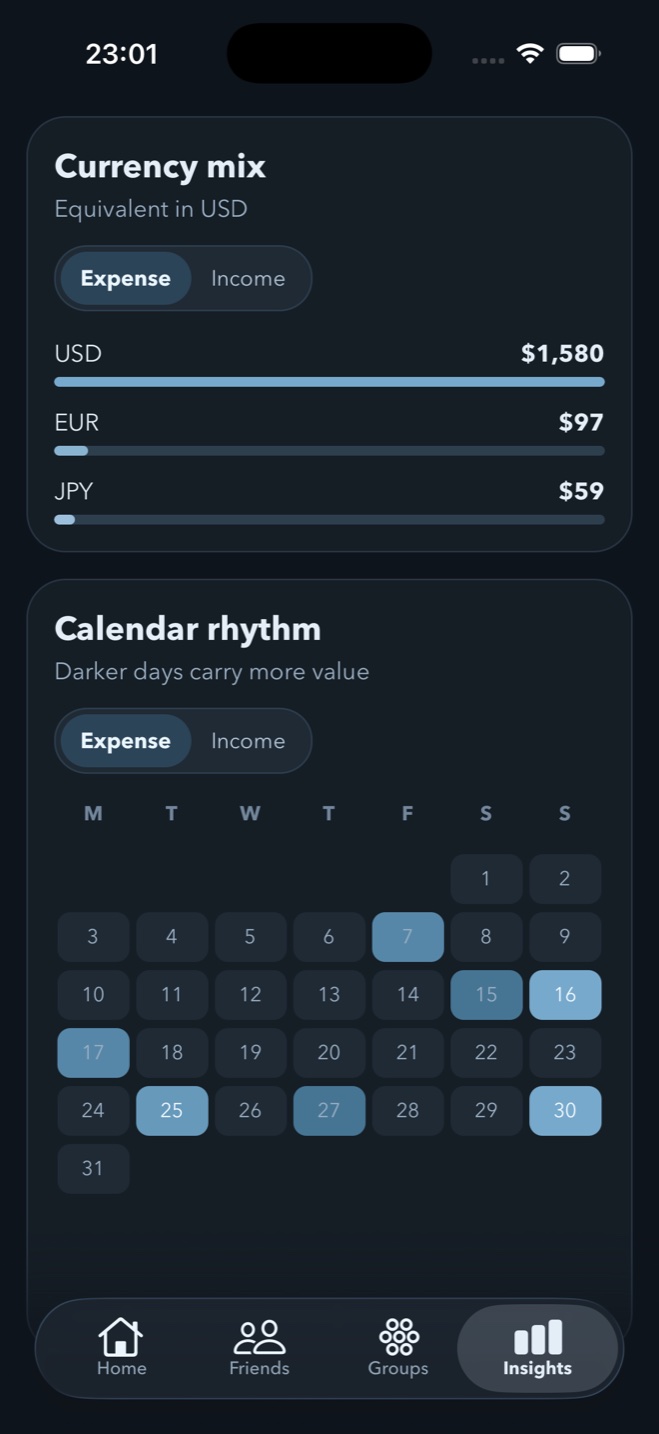
Private spending and shared costs live side by side, without getting mixed up.
See direct balances and the groups you share from one calm view.
Keep notes, receipts, dates, locations, and categories with the expense.
Expenses, loans, edits, and settlements remain understandable after the moment passes.
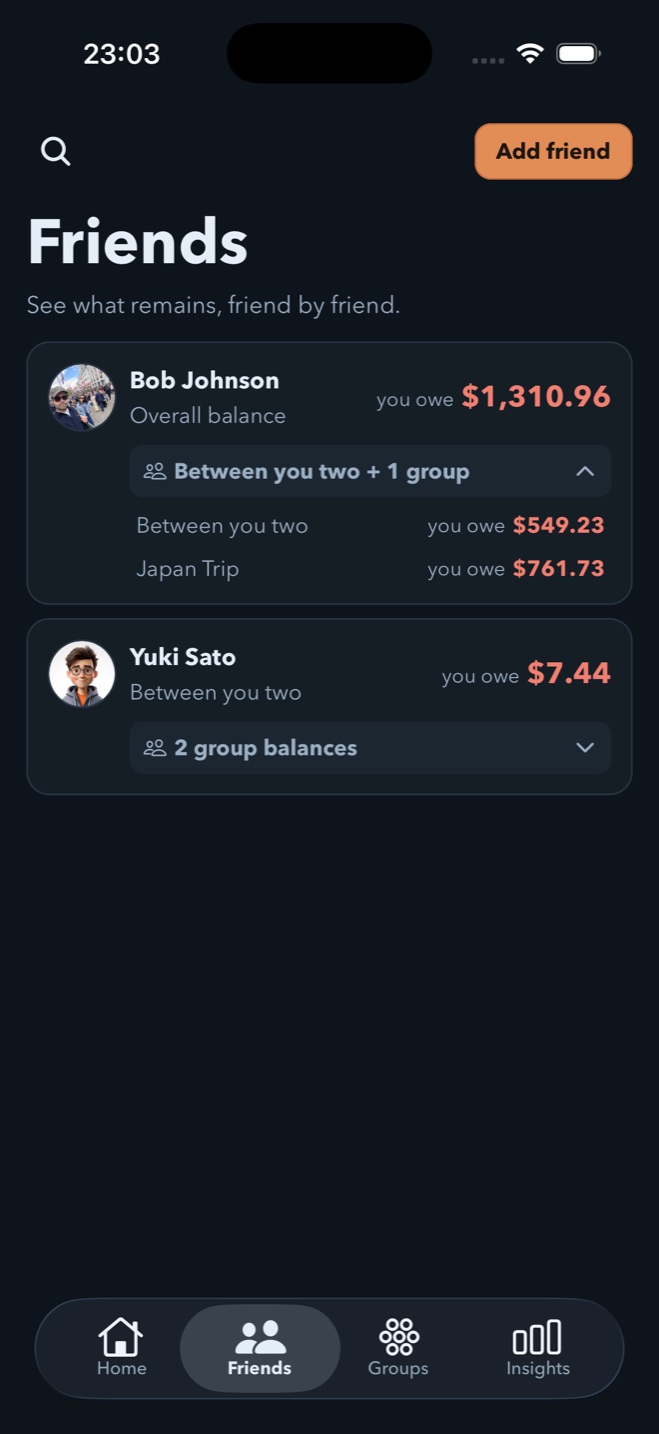
Friend by friend
Direct expenses and shared groups roll into one understandable balance. Open the detail when you need the story behind it.
Open your balancesGood to know
Yes. Spendol is personal-first: track everyday spending and income privately, then share only the expenses that belong with friends or a group.
Use equal shares, exact amounts, percentages, or weighted shares. The calculation stays deterministic down to the final cent.
No. Spendol records loans and settlement agreements so everyone has the same record. The actual transfer happens outside the app.
You can keep working. Changes are saved locally first and sync automatically after your connection returns.
Yes. Shared activity can include multiple currencies, and settlements can use another currency with a locked conversion when that is easier.
Ready when you are
Open Spendol and get back to the people and plans the money was for.